
'China wants to control and divert rivers.'
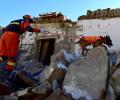
Local officials said no casualties have been reported due to Wednesday's quake that hit the Madoi County in Golog Tibetan Autonomous Prefecture of Qinghai province of northwest China at 3:44 pm (Beijing time), tremors for which were also felt in north-eastern Nepal.

As the Dalai Lama turns 75 on July 6, he speaks about the importance of the Indian tradition of Nalanda, the differences between Buddhist science, philosophy and religion and why he believes that a 'sort' of cultural genocide is happening in Tibet.

A large number of Tibetan refugees on Saturday organised a rally in Guwahati to register their protest against continued self-immolation by their compatriots back home against the 'suppression' by the Chinese regime. The protestors, under the aegis of the Tibetan Solidarity Committee, orgainsed a rally on the occasion of the 53rd Tibetan National Uprising Day to express their anguish over the death of another Tibetan due to self-immolation in Ngaba in north-eastern Tibet.
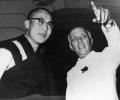
One priority for Delhi (for the new foreign secretary in particular) is to have an in-depth discussion with Dharamsala as soon as possible, suggests Claude Arpi.
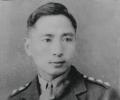
Major Khathing was the first man to hoist the Indian flag in Tawang. He also brought Bum La under Indian control.

Why can't the Indian government propose to the Chinese a corridor circumambulating the Holy Mountain where people from both sides could perform the yatra again? asks Claude Arpi.
At least seven people have been killed and 22 others injured in Tibet as the earthquake that hit Sikkim and other North Eastern states in India also rocked the Chinese autonomous province leaving trail of destruction.

In underlining the role of border villages as custodians of India's frontiers, New Delhi is following China's example in Tibet.

A lesson we have not learnt from China is the urgent need to knit the vast country together to keep it from falling apart at the seams. While there is considerable dent in poverty, sadly, the North East remains as distant today as it always was, points out Shreekant Sambrani.
India says the State of Arunachal Pradesh is its integral and inalienable part.

'Its aim is to force the Bhutanese government to cede territory that China wants elsewhere in Bhutan to give Beijing a military advantage in its struggle with New Delhi.'

Tawang wears its history -- and also its present -- with ease. The flourishing town, with restaurants selling everything from noodles to dosas and locals returning home to new business prospects, shows little sign of the tension building up at the border about 40 km away to the north.
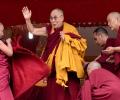
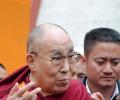
'The Bharat Ratna should have been given a long time ago. Not just to irk the Chinese, but to recognise His Holiness for what he is and how we have benefited immensely from his presence in India.' 'I don't think there's been a better ambassador for India's philosophical and cultural past than the Dalai Lama.'
Referring to allegations that it was "silly for China" not to have names for various counties and inventing them for six places in Arunachal Pradesh, an op-ed article in the state-run Global Times said "these comments are absurd".
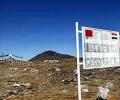
The move was aimed at 'reaffirming China's claim over the state'. China claims the state as 'South Tibet'.

16 Indian Army divisions face China, 20 face Pakistan and two divisions are reserves. This powerful signal can hardly be missed in China or Pakistan, notes Ajai Shukla.

China has long coveted Arunachal Pradesh, which it calls Southern Tibet. But, as Venkataraghavan Subha Srinivasan explains, in 1947, the present state of Arunachal Pradesh constituted the North East Frontier Tract of Assam. When India adopted its Constitution on 26 January 1950, NEFT became 'a separate politico-administrative entity' although it was constitutionally still a part of Assam. Its administration was brought directly under the President of India with the Governor of Assam acting as his agent. A revealing excerpt from his book The Origin Story of India's States.
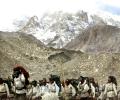
The Indian Army will continue to maintain its aggressive posturing in all disputed areas in eastern Ladakh and will not back off till status quo is maintained, sources said.
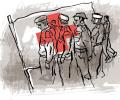
'All PoWs recounted that one of the worst aspects of their captivity in Tibet was the constant attempt at brainwashing by Chinese Communist propaganda,' reveals Claude Arpi.

The ministry of external affairs said India has conveyed its "consistent position" on the issue to China on several occasions.

'The Himalayan people may not represent a large or politically influential section of the population, but India's security depends on them.' 'Let us hope Sikkim remains a beacon of stability,' says Claude Arpi after a recent visit to the picturesque north eastern state.

'Does the Indian army's new assertiveness risk a clash escalating into shooting and possibly skirmishes?' asks Ajai Shukla.

'As for tricky relations with China, India needs less of summitry type event management and more anticipatory analysis and management of events,' says Ambassador Jaimini Bhagwati.

'Manmohan Singh's fond hope of avoiding conflict over territory by 'making borders irrelevant' is increasingly difficult to realise in a world where institutional restraints on aggression are weakening and the new game in town is unalloyed power play,' notes T N Ninan.

When China protested strongly over the August decision on J&K -- not once but twice -- we ignored it. And to compound matters, we simply turned our back and walked over to the 'Quad' alliance with the US, upgrading it to ministerial level, and thereafter began following the American footfalls on Taiwan and COVID-19 to taunt and humiliate Beijing, observes Ambassador M K Bhadrakumar.

China also said that it was opposed to any third-party involvement in the resolution of the Sino-India boundary disputes.

Former Research and Analysis Wing chief Sanjeev Tripathi on Tuesday joined the Bharatiya Janata Party ahead of the Lok Sabha elections, following the footsteps of several retired bureaucrats and diplomats finding a career in politics.
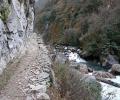
'It is certainly time for New Delhi to open up. Not only should it go ahead at full steam with the roads to the LAC, but the government must also allow tourists to visit these stunningly beautiful areas of Indian territory.'
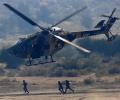
'Given the present force levels, India cannot fight and win.' 'India can't hope to terminate the conflict on India's terms and impose the nation's will upon the adversaries,' says Brigadier Gurmeet Kanwal (retd).
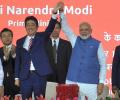
Chinese foreign ministry spokesperson Hua Chunying, while reacting to Japan's plans to step up investments in the northeastern states, told the media that China is opposed to any foreign investment in the areas where it has disputes with India.

'The Chinese forces in the narrow Chumbi Valley are currently in the line of sight and fire of Indian forces poised on the ridges along the Sikkim-Tibet border.' 'Aware of this vulnerability, the Chinese have been eyeing the Doklam plateau,' explains national security expert Nitin A Gokhale.

China on Sunday said the border dispute with India has been "contained" and the Indian elephant and Chinese dragon should "do more" to strengthen the bilateral cooperation to facilitate its settlement.

Prime Minister Narendra Modi's visit to Arunachal Pradesh on Friday, February 20, irritated the Chinese government so much that it summoned the Indian ambassador to register its protest against Modi visiting a territory China claims as Southern Tibet.

Harish Kapadia is the only Indian to win mountaineering's most prestigious award.

This was the first round of talks for Wang after he succeeded State Councillor Yang Jiechi earlier this year.

'If, as appears to be the case, India is on way to 'mending fences' with China, and China is equally desirous to 'reset' the relationship, this could be a self-reflexive moment in India's positioning vis-a-vis not just the Dalai Lama, but also the Tibetan issue and China as a whole,' points out China expert Alka Acharya.

The Dalai Lama will be in the north eastern state from April 4 to 13 and Union Minister of State for Home Kiren Rijiju.

The new PM would be more than unwise to attempt steering away from India into an all-encompassing Chinese embrace that would ultimately swamp Bhutanese identity, says Brigadier S K Chatterji (retd).

The towering face of Kailash reminded us that we were but insignificant participants in a pilgrimage ritual that has played out over millennia for people of four major religions -- Hinduism, Buddhism, Jainism and Bon, notes Sonia Trikha Shukla.
